

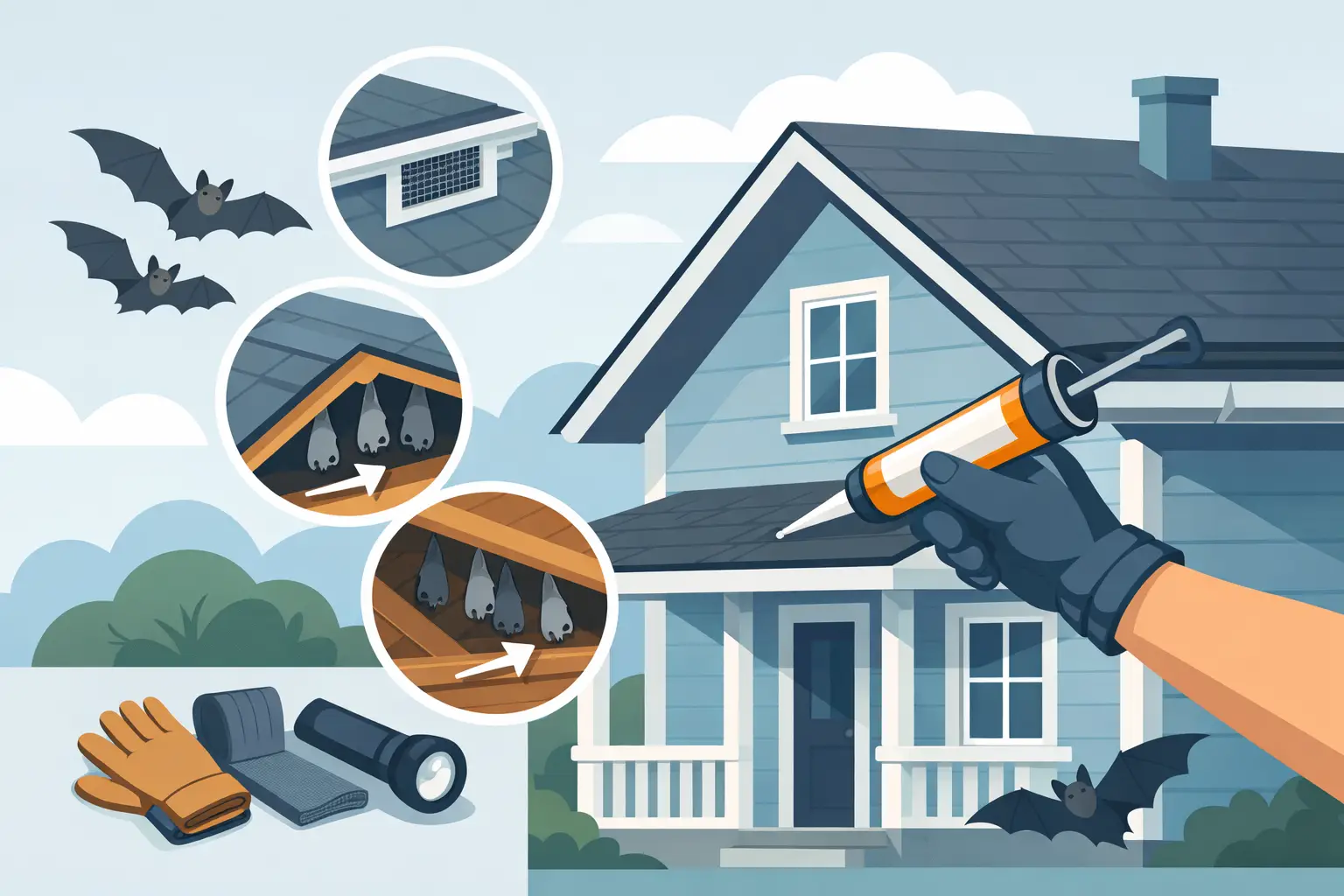
A faint scratching above the ceiling at dusk, droppings on the porch, or a bat circling near an attic vent can turn a quiet evening into a real property concern. This homeowner guide to bat proofing explains what is happening, what not to do, and how to protect your home without harming bats.
Bat proofing is not about trapping or poisoning wildlife. It is a precise exclusion process: identify every active entry point, allow bats to leave safely, then permanently seal the structure so they cannot return. Done correctly, it protects your family, your building, and a beneficial animal that belongs outdoors.
Why bat proofing needs a careful approach
Bats can enter through gaps far smaller than most homeowners expect. A space around roof flashing, a loose soffit panel, an unsealed utility penetration, or a gap beneath siding may be enough. Once inside, they often settle in attics, wall voids, chimneys, church steeples, and other warm, protected areas.
The biggest mistake is sealing a hole as soon as you find it. If bats are still inside, they may become trapped in walls or living areas, creating a worse problem. You may also separate flightless pups from their mothers during maternity season. Bat activity and timing vary by species and location, so exclusion work must account for the season as well as the building.
A permanent solution also goes beyond the one opening where you first saw a bat. Colonies may use several access points, including small gaps that are difficult to see from the ground. Missing even one secondary opening can lead to a repeat infestation after the main access point is closed.
Signs bats may be using your home
A single bat outdoors does not mean your house has an infestation. Bats are active at night and commonly feed around lights, trees, ponds, and open spaces. The concern begins when their behavior suggests they are roosting in the structure.
Watch for bats consistently emerging from the same roofline, vent, chimney, or siding gap around sunset. You may hear chirping, squeaking, or light scratching in an attic or wall shortly before dusk and again near dawn. Dark staining or greasy-looking rub marks around a small opening can indicate repeated use.
Guano is another important sign. Bat droppings may collect below a roost, near an attic access point, on a porch, or along exterior walls. They can resemble rodent droppings, but guano often contains shiny insect fragments when examined closely. Do not handle or sweep it without proper protective equipment. Disturbing dry droppings can send dust into the air, and a large accumulation may require professional cleanup.
If a bat is found in a room where someone was sleeping, where a child was unattended, or where a pet may have had contact with it, do not release it before speaking with local public health officials or a qualified professional. That situation calls for prompt, case-specific guidance.
A homeowner guide to bat proofing: the right process
Professional bat proofing begins with a detailed inspection, not a ladder and a tube of caulk. The goal is to understand where bats enter, where they are roosting, and whether conditions are appropriate for exclusion.
Inspect the entire exterior
An effective inspection covers the full building envelope, including roof intersections, fascia boards, soffits, gable vents, ridge vents, chimneys, dormers, siding transitions, attic louvers, window trim, utility lines, and foundation-to-siding areas. On older homes, weathered materials and past repairs often create hidden gaps.
The inspection should also identify damage that needs repair. Loose screening, deteriorated wood, bent flashing, and open construction joints can all create future access points. Sealing bats out while leaving the building vulnerable to water or other wildlife is not a complete property-protection plan.
Confirm active entry points
Seeing bats leave at dusk is often the clearest way to confirm an opening. A trained bat specialist may use observation, staining patterns, guano placement, and building knowledge to distinguish active gaps from potential gaps.
This step matters because bats do not always use the most obvious hole. For example, an attic vent may look like the problem, while the active opening is actually a narrow separation behind a fascia board several feet away.
Install one-way exclusion devices
Once active exits are confirmed and the timing is appropriate, one-way exclusion devices are installed over those openings. These devices let bats leave to feed but prevent them from re-entering. The rest of the potential access points are sealed with materials suited to the location, such as durable metal flashing, professional-grade sealant, or properly fitted screening.
One-way devices need to remain in place long enough for the bats to exit. Removing them too soon, or sealing the primary exit before the colony has left, can trap animals inside. Weather and seasonal conditions may affect the schedule, which is one reason this work should not be rushed.
Permanently seal and repair
After the exclusion period, the devices are removed and the final openings are sealed. Quality workmanship matters here. Expanding foam alone is often not a lasting exterior barrier because it can deteriorate, be chewed by other animals, or leave vulnerable edges. The right repair depends on the construction material and the size and location of the gap.
A good exclusion plan should leave the home protected without blocking necessary ventilation or creating a moisture problem. Vents should be secured with appropriate screening or covers, not simply sealed shut when they are designed to move air.
Address guano and sanitation needs
Not every bat issue requires major cleanup. A small amount of guano outside a roosting area may be manageable with the right precautions. An attic or wall void with significant accumulation is different. Guano can create odor, stain materials, attract insects, and compromise insulation.
Professional cleanup may involve controlled removal, HEPA-filtered vacuuming, sanitation, and replacement of damaged insulation when needed. The right scope depends on how long bats have been present, the size of the colony, and whether droppings have spread beyond the main roost area.
What homeowners should not do
Avoid using poison, glue traps, mothballs, ultrasonic devices, or bright lights to force bats out. These methods are ineffective, inhumane, or both. They can also cause bats to move deeper into the structure instead of leaving.
Do not block an opening while bats are visibly entering or exiting. Likewise, do not attempt high-roof repairs without proper fall protection. Bat work often happens at rooflines and around complex architectural features, where a small mistake can lead to injury or expensive water damage.
It is also wise to avoid handling a grounded or injured bat. Keep children and pets away, close the room off if the bat is indoors, and seek professional or local animal-control guidance. A bat in a living space is not the same as a bat in an attic, and the response should reflect that difference.
Seasonal timing can change the plan
Humane exclusion is not a one-size-fits-all job. In the Midwest, maternity season is a critical consideration because young bats may not yet be able to fly. Excluding adult bats during that period can leave pups trapped inside, which is harmful to the animals and can create odor and insect issues in the home.
For that reason, a responsible bat professional may recommend monitoring, planning repairs, or scheduling exclusion for a safer window rather than immediately closing every opening. That can feel frustrating when you want the problem gone quickly, but it protects against a much more serious issue inside the structure.
Winter also requires judgment. Some bats may hibernate in buildings, while others may use structures intermittently depending on weather and species. An inspection can determine whether active exclusion, repairs, or a scheduled return visit is the appropriate next step.
When to call a bat specialist
A homeowner can identify obvious signs and take sensible safety steps, but permanent bat proofing is usually best handled by a company focused specifically on bats. Look for a provider that performs a full inspection, explains the exclusion method clearly, considers seasonal restrictions, offers guano cleanup when needed, and stands behind the completed work with a meaningful guarantee.
CP Bat Mitigation brings more than 30 years of specialized experience to safe, humane bat removal and long-term exclusion across the region. The right inspection should give you a clear answer about where bats are entering, what repairs are needed, and when the work can be completed responsibly.
Your home should remain a safe, clean place for the people inside it. Every Bat Deserves a Home, Just Not Yours.™