

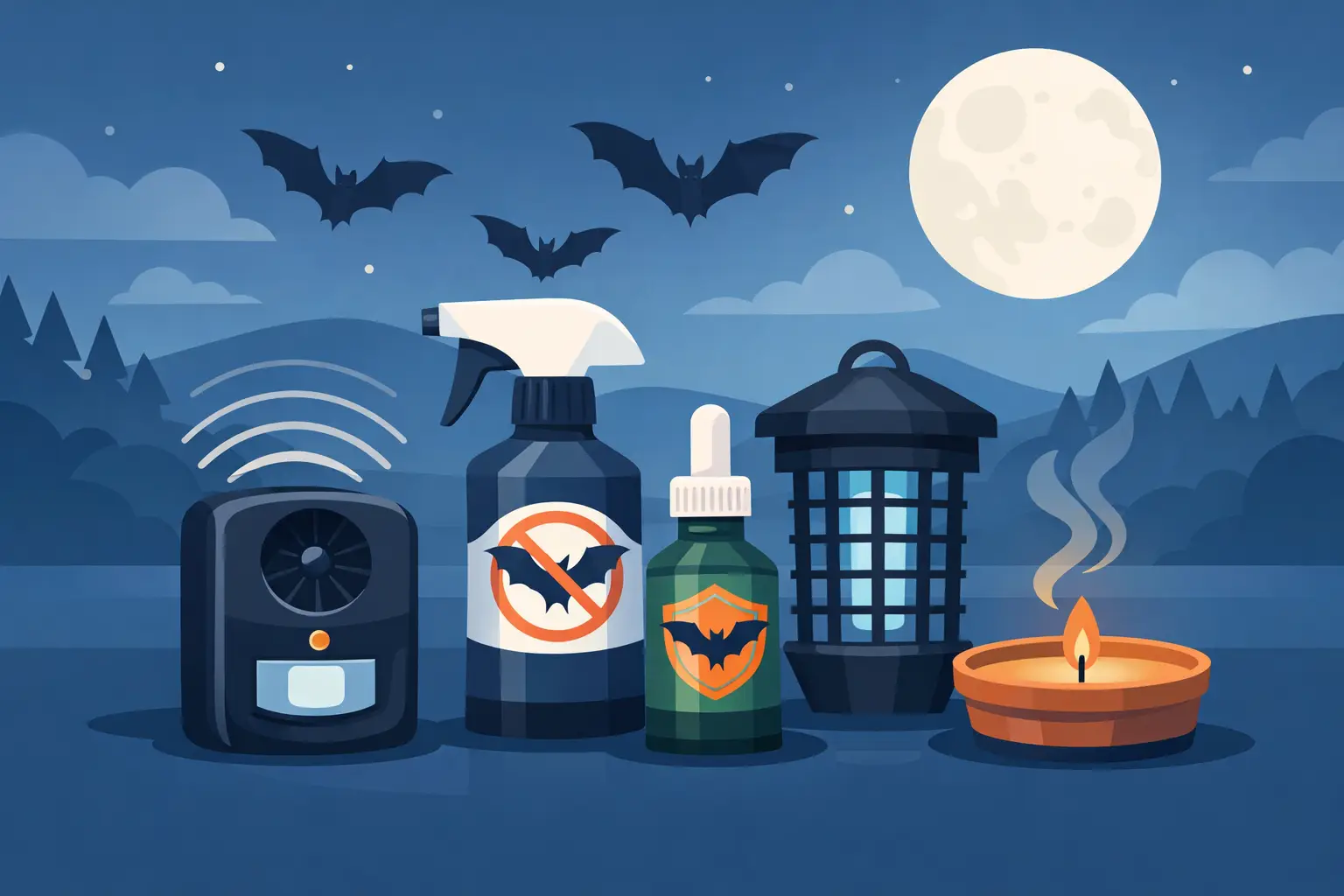
If you are hearing scratching above the ceiling at dusk or finding droppings in the attic, you are probably searching for the best bat repellents that work and hoping for a quick fix. That makes sense. Most property owners want the problem gone fast, without damage, odor, or a return visit from the colony a few weeks later. The hard truth is that most products sold as bat repellents do not solve an active bat infestation.
That does not mean you are out of options. It means the real solution is different from what the packaging usually promises. With bats, the goal is not to make your attic smell unpleasant or blast noise into the rafters. The goal is to get every bat out safely, close the entry points they are using, and keep them from coming back.
What people mean by the best bat repellents that work
When homeowners ask about repellents, they usually mean one of three things. They want something that drives bats out, something that keeps bats from landing or roosting, or something that prevents a future infestation. Those are not the same problem, and that distinction matters.
For an active colony inside a structure, there is no spray, pouch, bright light, or ultrasonic gadget that matches the reliability of professional exclusion. Some products may disturb bats temporarily. A strong odor may shift where they hang inside a void. A light may cause brief avoidance. But temporary irritation is not the same as removal. In many cases, it just pushes the bats deeper into the building.
That is where many do-it-yourself attempts go wrong. People spend money trying multiple repellents, the bats remain, and the infestation grows while guano accumulates. By the time a specialist is called, the cleanup is bigger and the repair bill is higher than it needed to be.
Why most bat repellents fail
Bats choose structures for very specific reasons. They want stable temperatures, protection from predators, and small concealed gaps they can use repeatedly. An attic, church steeple, warehouse roofline, or apartment soffit gives them exactly that.
A repellent product has to overcome all of those benefits. Most cannot. Mothballs are a common example. People hear they repel wildlife and assume they will work on bats. In real buildings, they rarely produce the desired result, and they can introduce chemical exposure concerns for the people living or working there. The same goes for aerosol sprays marketed for nuisance animals. Even if the smell is unpleasant, it does not close the opening the bats are using.
Ultrasonic devices are another popular purchase. They appeal to property owners because they sound easy and non-invasive. In practice, their results are inconsistent at best. Bats in a real-world structure are not sitting in one open room where sound waves hit every surface evenly. They are tucked into cracks, wall voids, ridge gaps, and hidden recesses. Devices that promise broad coverage often do not reach the spaces that matter.
Bright lights and high-frequency disturbance can also backfire. A colony may shift locations instead of leaving the property. That can turn one contained roost into a wider building problem.
The only proven answer for an active infestation
If you want the closest thing to the best bat repellents that work, the answer is humane exclusion, not repellent in a bottle. Exclusion uses one-way devices that let bats leave but not re-enter. Once all bats are out, every secondary gap and primary entry point is sealed.
This is why specialist bat control companies focus on exclusion rather than general pest-style treatment. It addresses the cause of the infestation, not just the symptom. If the gap remains open, the building is still inviting bats. If the opening is professionally sealed after proper removal timing, the structure stops functioning as a roost.
That timing piece is critical. Bat work is not just about finding holes. In many cases, there are legal and ethical restrictions around maternity season because flightless young may be present. Sealing a structure at the wrong time can trap pups inside and create a bigger sanitation and odor issue. A trained bat specialist knows when exclusion can be performed safely and when temporary planning measures are the better choice.
What actually helps keep bats away
There are a few prevention measures that do help, but they work best after the bats are removed. Sealing construction gaps is the big one. Bats can enter through surprisingly small openings around rooflines, fascia, vents, ridge caps, gables, siding transitions, and utility penetrations.
Well-installed screening and repair materials matter too. Cheap patch jobs often fail because weather, building movement, and bat pressure expose weak points. This is one reason property managers and commercial operators often choose a bat specialist instead of a general handyman. The work has to hold.
Habitat changes can reduce attraction around a structure, though they are not a standalone solution. Exterior lighting that draws heavy insect activity may indirectly support bat feeding nearby. Vegetation touching parts of the building can also make inspections harder and conceal entry points. Still, even perfect landscaping will not stop bats from using an open gap if the structure gives them shelter.
Bat houses come up often in this conversation. They are not repellents, and they will not pull bats out of an attic on command. But in some situations, they can be part of a broader wildlife-conscious approach after exclusion is complete. They should never be treated as a substitute for sealing the building.
Products and methods to be cautious about
Anything marketed as a miracle bat fix deserves skepticism. If it sounds easier than inspection, exclusion, and repair, it usually is. Chemical repellents, essential oil blends, mothballs, ammonia placement, ultrasonic units, and random internet remedies all tend to overpromise.
There is also a safety issue. Bats are a protected and beneficial part of the ecosystem, but direct handling should be avoided. If a bat is found in a sleeping area or near a person or pet, that situation should be handled with added care because of potential rabies exposure concerns. Guano is another issue. Disturbing a large accumulation without proper containment can spread contamination through the property.
That is why the cheapest option is not always the safest or the most affordable in the long run. Failed repellent attempts often delay the one service that actually resolves the problem.
How to choose the right solution for your property
Start by identifying whether you have a single bat incident or an established roost. One bat in living space may be an isolated event. Repeated sightings at dusk, chirping in walls, staining near roof edges, or piles of droppings below an entry point suggest something more serious.
Next, think in terms of permanent correction. Ask whether the method removes all bats safely, whether it addresses every active and potential entry point, and whether there is a clear plan for cleanup and sanitation if needed. If the answer is no, it is probably not a real solution.
For homes, that usually means a full exterior inspection and species-aware exclusion plan. For churches, schools, warehouses, apartment buildings, and agricultural structures, the process can be more complex because of height, access, code requirements, and larger roosting areas. In those cases, experience matters even more.
A specialist like CP Bat Mitigation is built for this kind of work because the focus is not broad pest control. It is safe, humane bat removal, proven exclusion methods, and long-term prevention backed by real field experience.
When to call a bat professional instead of buying another product
If you have seen multiple bats, found guano, noticed odor, or already tried a repellent without results, it is time to move past retail solutions. The same is true if the building is tall, historically sensitive, occupied by tenants, or used for business operations where sanitation and compliance matter.
A professional inspection can tell you where the bats are entering, whether young may be present, how extensive the roost is, and what it will take to solve the issue without unnecessary risk. That is far more useful than guessing between gadgets on a store shelf.
There is a reason experienced bat companies do not lead with repellents. After thousands of structures, the pattern is clear. Bats leave for proven exclusion, and they stay out when the building is sealed correctly.
If you are dealing with bats, the most helpful shift is this one: stop asking which product might bother them, and start asking which solution will keep your property protected for good. Every bat deserves a home, just not yours.