

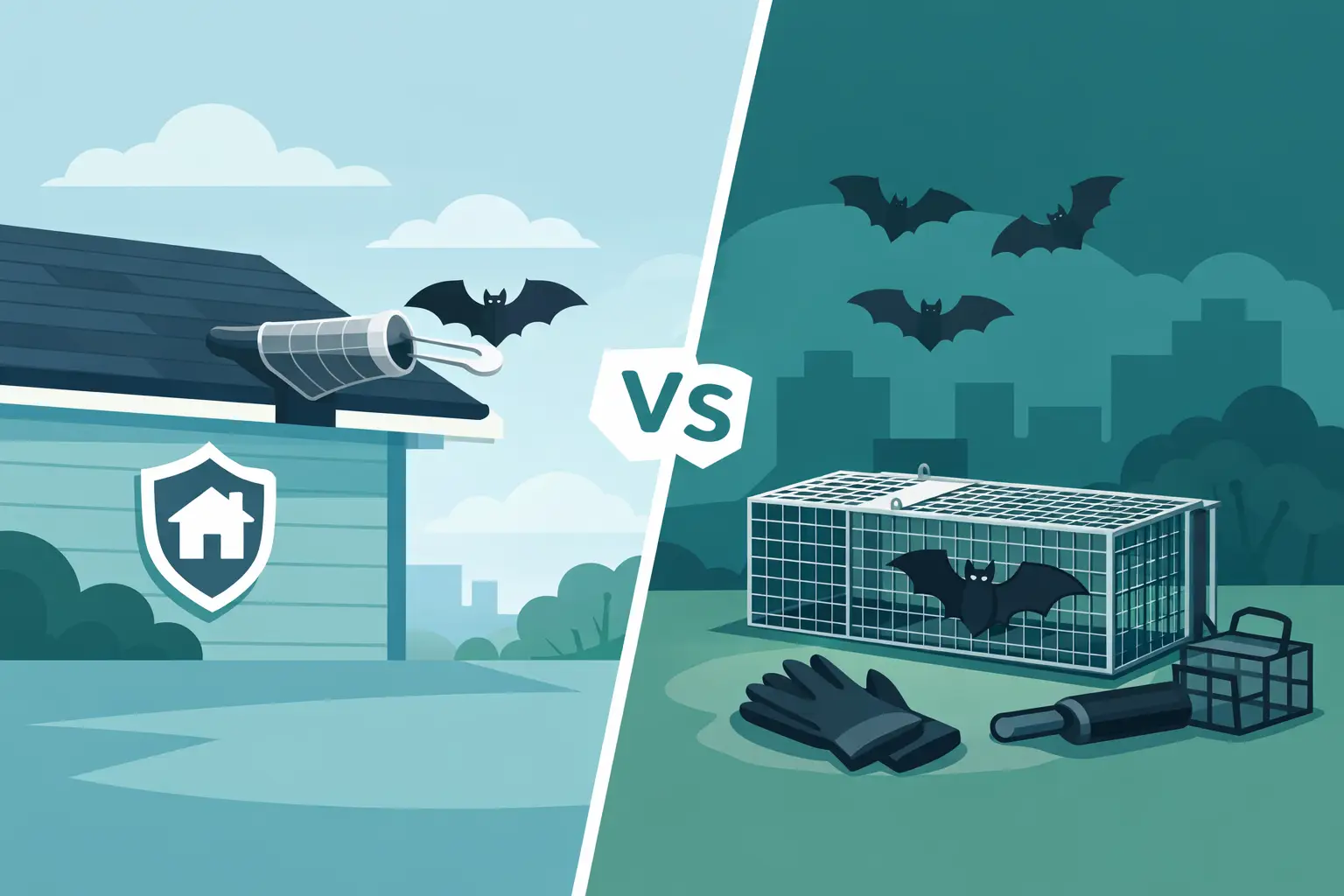
A bat colony in an attic, church steeple, warehouse, or wall void is not a problem that gets solved by removing a few visible animals. The real question behind bat exclusion versus trapping is whether the approach removes the entire colony while stopping the next colony from using the same openings. For most buildings, proven exclusion is the humane, lasting answer.
Bats can enter through gaps that appear insignificant to a property owner – spaces around rooflines, vents, flashing, utility penetrations, and siding transitions. Once they find a suitable roost, they may return season after season. A proper solution must account for the bats you can see, the ones you cannot see, and every route they use to get in.
Bat Exclusion Versus Trapping: The Core Difference
Bat exclusion lets bats leave a structure but prevents them from coming back inside. A trained bat specialist identifies primary exit points, seals secondary entry gaps, and installs one-way exclusion devices at active exits. When bats emerge at dusk to feed, they can pass through the device. When they return, the device prevents re-entry.
Trapping, by contrast, involves capturing bats individually or in groups. It may sound like a direct way to remove an infestation, but it does not correct the conditions that allowed bats into the building. Unless every entry point is located and sealed correctly, more bats can enter after trapped bats are removed. The property remains vulnerable, and the cycle can begin again.
That distinction matters for homes and commercial properties alike. A homeowner may hear scratching in an attic. A property manager may notice droppings near a loading bay or find bats in a mechanical room. In both cases, the building itself is the issue. Exclusion addresses the building. Trapping usually does not.
Why Exclusion Is the Preferred Long-Term Method
Humane bat removal is not simply about getting bats out quickly. It is about removing them safely, protecting people and property, and preventing a repeat infestation. One-way exclusion methods are designed around natural bat behavior. Bats leave their roost to feed, then are prevented from reclaiming that interior space.
This approach has several practical advantages. It avoids the stress and risk of repeatedly handling wildlife, protects the structure from further contamination, and creates a path toward permanent prevention. It also allows the technician to focus on the work that matters most: locating the small construction gaps that general pest control providers may overlook.
For a property owner, exclusion also provides clearer proof of progress. Bat activity should decline as the colony exits, followed by confirmation that the structure is sealed and no bats remain inside. A professional inspection can then determine whether guano cleanup, odor treatment, insulation removal, or repairs are needed to restore the affected area.
At CP Bat Mitigation, the goal is safe, humane bat removal backed by a prevention-first mindset: Every Bat Deserves a Home, Just Not Yours.™
Exclusion Requires Detailed Building Knowledge
No two structures have the same entry pattern. Older homes can have open gaps beneath fascia boards or behind chimneys. Churches often have high roof transitions, louvers, and bell-tower openings. Commercial buildings may have gaps around expansion joints, dock doors, rooftop equipment, or utility conduits.
A successful exclusion depends on identifying all of those vulnerabilities. If a technician installs a one-way device but leaves alternate gaps open, bats may simply move deeper into walls or use another route into the building. That is why a quick patch at the most obvious hole can create more problems than it solves.
Experienced bat specialists inspect the exterior carefully, assess evidence around likely entry points, and watch for bat activity patterns when needed. The work often requires ladders, lifts, roof-level access, and an understanding of how bats move along edges and crevices. Permanent results come from meticulous sealing, not guesswork.
When Trapping Creates Problems
Trapping can seem appealing when a bat is seen indoors. However, a visible bat is often only one part of a larger colony. Removing individual bats from a structure does not reveal where they entered, whether more remain in inaccessible voids, or whether young bats are present.
It can also increase handling risks. Bats should never be touched with bare hands. Any bat found in a living space, especially a bedroom with a sleeping person, child, or impaired adult, should be handled cautiously and according to local public health guidance. In certain exposure situations, the bat may need to be retained for testing rather than released. This is a public health matter, not a standard exclusion scenario.
There are limited circumstances where capture may be appropriate, such as a single bat in an occupied room or a situation directed by wildlife or health authorities. Those cases are different from removing an established attic colony. For colonies, trapping is not a reliable substitute for full exclusion and structural sealing.
Legal protections are another consideration. Bat species and wildlife rules vary by state, season, and location. Improper trapping, relocation, or removal can create legal issues and may harm protected wildlife. A qualified bat professional understands how to plan work around applicable requirements and the biology of the colony.
Timing Matters: Never Exclude During the Wrong Season
The best bat-removal method can still be harmful if it is performed at the wrong time. During maternity season, adult females may leave to feed while pups remain inside the roost. Young bats cannot fly for a period of time. If entry points are sealed or one-way devices are installed too early, the adults may be excluded while flightless pups are trapped inside.
That outcome is bad for the bats and bad for the building. It can lead to odor, insects, staining, and distressed adult bats attempting to find another way inside. In some cases, bats may enter living areas as they search for an escape route.
A responsible specialist evaluates the season, species activity, and signs of a maternity colony before deciding when to perform exclusion. Sometimes the correct recommendation is to monitor, prepare repairs, and schedule the final exclusion for the appropriate window. Waiting can be frustrating, but it is often the most humane and effective decision.
The same care applies during periods of low activity. Bats may use a structure differently depending on weather and seasonal behavior. A thorough inspection helps determine whether the building is actively being used and how to proceed without creating an avoidable problem.
What a Professional Exclusion Process Should Include
A reliable bat-control plan begins with an inspection, not a trap. The inspection should identify likely species activity, active entry and exit points, secondary gaps, interior evidence, and any contamination concerns. The property owner should understand what will be sealed, where one-way devices will be installed, and when the work can safely occur.
The exclusion phase typically involves sealing non-active openings first, leaving only confirmed exits available for one-way devices. This order is critical. Sealing everything at once can trap bats inside. Leaving too many gaps open can allow re-entry and undermine the project.
After the bats have had time to exit, the specialist removes the devices and completes final sealing. Depending on the property, the work may also include screening vents, repairing damaged trim, closing gaps around roof intersections, or addressing other bat-friendly construction details.
Finally, the interior should be assessed for guano and urine contamination. Bat guano can affect insulation, drywall, wood surfaces, and indoor air quality. Cleanup is not cosmetic. In significant infestations, it is part of protecting the property and the people who use it.
Choosing the Right Solution for Your Property
If you are comparing bat exclusion versus trapping, ask a simple question: will this service keep bats from returning to the building? If the answer is unclear, the solution is probably incomplete.
Look for a provider that specializes in bats, explains seasonal timing, inspects the full exterior, and offers a clear plan for sealing entry points. Be cautious of anyone promising to solve a colony problem with a few traps, poison, or a same-day seal-up without evaluating whether young bats could be inside. Bats should not be poisoned, and a rushed approach can turn a manageable issue into a larger property problem.
A bat problem deserves careful work, not a temporary fix. The right exclusion plan protects your home or building, respects wildlife, and gives the colony a reason to find a new roost – somewhere that is not over your ceiling, behind your walls, or above the people who depend on your property.