

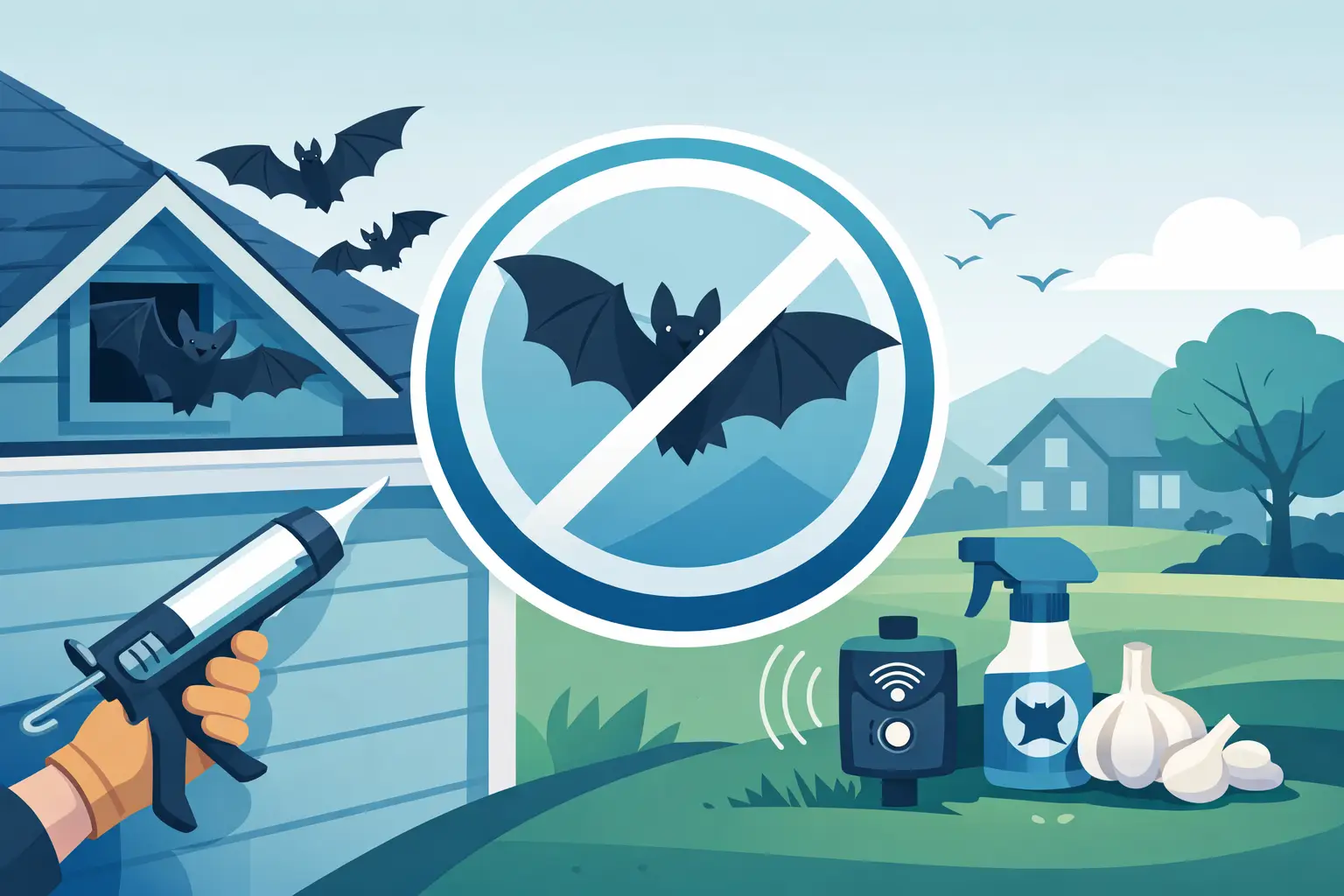
You usually notice bats at the worst possible moment – just after sunset, when something small slips past the roofline, or when scratching and chirping start above the ceiling. If you are searching for how to keep bats away, the goal is not to scare them for a night. The goal is to stop them from using your home, church, office, or commercial building as a roost in the first place.
That distinction matters. Bats are persistent, and once they find a quiet, sheltered space, they often return season after season. At the same time, they are protected wildlife in many situations and should be handled humanely. Every bat deserves a home, just not yours. The right approach protects your property, your occupants, and the bats.
How to keep bats away starts with understanding why they show up
Bats are not looking for people. They are looking for stable shelter, warmth, and small openings that lead into attics, wall voids, steeples, soffits, barns, warehouses, and other protected spaces. A gap that seems insignificant to a property owner can be enough for a bat colony to enter.
In the Midwest, we often see activity around roof intersections, fascia gaps, ridge vents, dormers, louvers, and expansion joints on larger buildings. Older homes and commercial properties tend to be more vulnerable because time, weather, and settling create entry points that are easy to miss from the ground.
Light, noise, and casual DIY deterrents usually do not solve this. If a structure offers safety and access, bats will often tolerate a surprising amount of disturbance. That is why prevention is more about structure correction than gimmicks.
The most effective way to keep bats away is exclusion
If bats are already getting in, the proven solution is exclusion. That means identifying every active and potential entry point, allowing the bats to exit safely, and then sealing the structure so they cannot re-enter.
This is where many property owners run into trouble. They find one obvious hole, seal it, and assume the problem is over. In reality, bats often use multiple access points. If only the main gap is closed, they may shift to a nearby seam, vent gap, or construction joint. Worse, sealing a building at the wrong time can trap bats inside.
Proper exclusion is detailed work. It depends on species behavior, building design, season, and whether there are young bats present. Humane timing matters. So does complete inspection. A partial job is one of the main reasons infestations come back.
What does not work well when trying to keep bats away
People often ask about mothballs, bright lights, ultrasonic devices, sprays, peppermint oil, or other off-the-shelf repellents. These methods are popular because they sound easy. Unfortunately, they are rarely reliable as a long-term solution.
A strong smell may bother you more than it bothers the bats. Noise devices can be inconsistent, especially in larger structures or complex roof systems. Floodlights may change behavior briefly, but they do not fix the opening that allows access. If bats have already established a roost, these methods usually shift the problem instead of solving it.
There is also a safety issue. Some products are used in ways that are not appropriate for occupied buildings, and DIY cleanup or handling can expose people to guano, strong odors, and potential health concerns. The trade-off with cheap shortcuts is often a bigger cleanup bill later.
Seal the building, but only after the timing is right
If you want to know how to keep bats away for good, sealing is the step that matters most. But it has to be done strategically.
First, the structure needs a full inspection from top to bottom. On homes, that includes the roofline, soffits, gable vents, chimney intersections, attic louvers, siding transitions, and any construction gaps. On churches, apartment buildings, schools, and commercial sites, the inspection often expands to parapets, steeples, wall caps, loading areas, and high-level architectural joints.
Next, active exits must be identified. One-way exclusion devices can then be installed so bats leave naturally and cannot get back in. After confirmation that the colony has exited, those openings are sealed permanently and secondary gaps are closed as well.
This is not just pest control. It is building protection. The materials matter, the workmanship matters, and the inspection matters. Done correctly, exclusion is a long-term prevention strategy. Done poorly, it is a temporary patch.
Sanitation and cleanup are part of keeping bats away
Even after the bats are gone, the site may still attract concern because guano and urine remain. That buildup creates odor, stains, and contamination issues in attics, insulation, wall voids, and mechanical spaces. In larger commercial or institutional buildings, it can become a serious maintenance and compliance problem.
Cleanup matters for two reasons. First, it restores the affected area and reduces odor and sanitation concerns. Second, it helps remove the signs of a previous roost. While cleanup alone will not keep bats away, leaving the mess behind is not a complete solution either.
In some properties, insulation replacement or surface treatment may be necessary. In others, the problem is lighter and more localized. It depends on how long the bats were present, how many there were, and where they were roosting.
How to keep bats away from porches, barns, and outbuildings
Not every bat issue is inside an attic. Sometimes bats gather around porches, barns, sheds, overhangs, or decorative exterior features. The fix depends on whether they are simply feeding nearby or actively roosting on the structure.
If they are feeding nearby, there may be no infestation at all. Bats are beneficial outdoors because they eat insects, and seeing them in the evening does not automatically mean you have a structural problem. If they are roosting on the building, the same principle applies: identify where they are accessing shelter and correct it.
For exterior-only concerns, reducing roost-friendly conditions can help. Repair loose trim, close open eaves, screen appropriate vents, and address sheltered gaps where bats can tuck in during the day. The key is to make the structure less inviting without harming wildlife.
Why bat season changes the answer
One reason bat control is not one-size-fits-all is seasonality. During maternity season, young bats may be present and unable to fly. Excluding the adults during that period can create serious problems inside the structure. That is why professional guidance is so important.
In colder months, activity patterns can also shift. Some buildings may appear quiet for a time, even though bats are still present in wall voids or sheltered areas. Property owners sometimes mistake reduced activity for resolution, only to see the problem reappear later.
The practical takeaway is simple: urgency is understandable, but timing still matters. The safest and most effective plan depends on what the bats are doing right now, not just what you observed last week.
When to call a bat specialist
If you have repeated sightings near the roofline, noise in the attic or walls, staining around upper-level gaps, guano accumulation, or a bat found inside the occupied space, it is time for a professional inspection. The same is true for apartment buildings, churches, agricultural structures, and commercial facilities where access is high or liability is a concern.
General pest control is not always enough for a bat problem. Bat work requires species awareness, humane exclusion methods, building-envelope knowledge, and a prevention mindset. A specialist focuses on permanent closure of entry points, not just immediate removal.
For property owners across South Dakota, Nebraska, Iowa, and Minnesota, that is why companies like CP Bat Mitigation focus only on bats. Specialization matters when the stakes include occupant safety, cleanup costs, and making sure the infestation does not come back next season.
The long-term mindset that actually works
The best answer to how to keep bats away is not a spray, sound machine, or quick patch. It is a complete plan: inspect the structure carefully, remove bats humanely, seal all entry points, clean affected areas, and correct the conditions that made the building attractive in the first place.
Some properties need a straightforward exclusion. Others require extensive sealing, high-access work, or major guano cleanup. That is the part many homeowners and facility managers do not see at first – the solution depends on the structure, the season, and how established the colony is.
If you suspect bats are using your property, the smartest next step is to act before a small entry issue turns into a larger sanitation and repair problem. A careful inspection now can save you a lot of frustration later.