

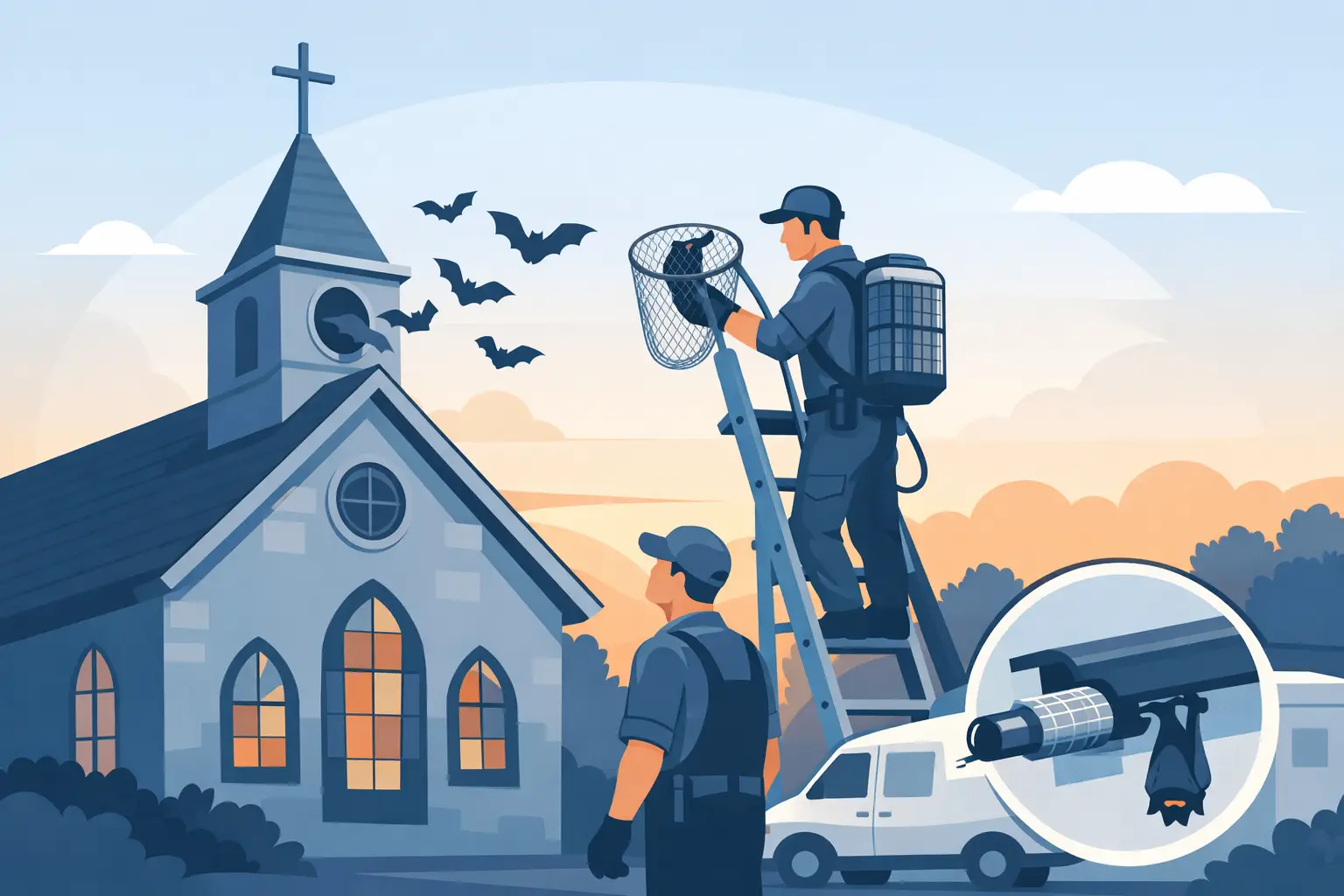
A bat sighting during choir practice is unsettling enough. Finding droppings in the attic, hearing movement above the sanctuary, or noticing a sharp odor near the bell tower turns it into a building problem that cannot wait. Church bat removal needs to be handled carefully because these buildings are large, historic, highly occupied, and often full of hidden gaps where bats can slip inside.
Churches present a unique challenge for bat work. Steeples, louvers, bell towers, slate roofs, masonry joints, and aging trim create dozens of potential entry points. At the same time, churches are not simple utility buildings. They serve congregations, host weddings and funerals, operate schools and daycare programs, and welcome visitors throughout the week. That means the solution has to protect the structure, the people using it, and the bats themselves.
Why bats choose churches
From a bat’s perspective, a church can be ideal shelter. High peaks and quiet upper voids provide the warm, protected space bats seek for roosting. Older construction often includes small openings around vents, soffits, ridge lines, and stone transitions. Those gaps may look insignificant from the ground, but bats only need a very small space to get in.
Bell towers are especially attractive. They are elevated, dark, and usually undisturbed for long periods. Attics above sanctuaries and fellowship halls can also support colony activity if the temperature is right. Once a colony finds a dependable roost, it often returns season after season unless the structure is professionally sealed.
This is one reason general pest control methods usually fall short. Bat issues in churches are rarely about one visible animal. More often, the problem involves a colony using multiple access points across a complex roofline.
Why church bat removal is not a simple one-visit job
A church is not a ranch house. The roof height alone changes the inspection process, and historic architecture adds another layer of care. Proper church bat removal starts with identifying all active and potential entry points, not just the hole where someone happened to see movement.
There is also the issue of timing. In many cases, removal has to be scheduled around bat maternity season. If flightless young are present, sealing the building too early can create a worse problem inside the structure. Humane bat removal depends on understanding bat behavior and applying exclusion methods at the right time.
Then there is sanitation. A long-term colony in a steeple or attic can leave behind significant guano and urine contamination. That affects odor, air quality, insulation, and in some cases wood or drywall conditions. If a church includes classrooms, offices, or nursery areas below the roost, cleanup becomes even more important.
What a proper church bat removal process should include
The first step is a full building inspection. On a church, that means more than a quick glance at the roofline. A specialist needs to assess the steeple, vents, eaves, louvers, soffits, flashing details, masonry gaps, and any upper-level transition points where bats may enter. Interior signs matter too, including staining, droppings, rub marks, and odor concentration.
Once active access points are confirmed, the next phase is exclusion. This is the humane standard for bat removal. Instead of trapping or poisoning bats, one-way devices are placed on active exits so bats can leave but cannot re-enter. At the same time, secondary gaps are sealed so the colony cannot simply shift to another opening on the same structure.
After the bats are out, final sealing is completed. This is where long-term results are won or lost. If the work misses hidden vulnerabilities, the problem often returns. A church may have dozens of architectural features that need close attention, so experience matters.
Cleanup comes next when contamination is present. Guano should be removed safely, and affected areas may need sanitation treatment or insulation replacement depending on the severity. The goal is not only to remove the bats but to restore the area so the building is cleaner, healthier, and less likely to attract future use.
Common mistakes churches make
The most common mistake is waiting too long. A few droppings in an attic or an occasional bat in a hallway may seem manageable, but colonies grow and contamination builds over time. Delays usually make exclusion and cleanup more involved.
Another mistake is relying on temporary fixes. Maintenance teams may patch a visible gap, install screening in one area, or try to scare bats away with lights or sound devices. Those approaches rarely solve the full problem because bats often have multiple exits and will find the path of least resistance.
The worst option is using poison or lethal control. It is inhumane, can create dead animals inside wall voids and steeples, and does nothing to address the underlying entry points. In many situations, it can also create legal and public relations problems for the church.
Health, safety, and building concerns
Not every bat issue creates an immediate health emergency, but churches should take the situation seriously. Bat guano can accumulate quickly in roosting areas, and strong odor can move through upper building cavities. Large deposits may stain ceilings, affect insulation, and contribute to indoor air concerns if disturbed.
There is also the people side of the problem. Churches often host children, older adults, volunteers, and large gatherings. If a bat enters occupied space, the response needs to be calm and handled properly. Any direct contact concern should be evaluated according to public health guidance.
From a property standpoint, historic churches require special care. Repairs need to respect original materials and architectural features. Effective exclusion should protect the look of the building while closing the routes bats are using.
Church bat removal for historic and active buildings
Some churches cannot simply shut down parts of the property for weeks. Services continue. Schools operate. Events stay on the calendar. That is why planning matters. A qualified bat specialist should be able to explain how the work will be staged, what areas may be affected, and how to minimize disruption.
Historic buildings add another layer of complexity because the solution has to be both effective and discreet. Oversized screening, sloppy sealants, or mismatched repairs can create new maintenance issues and damage the building’s appearance. Good exclusion work blends with the structure as much as possible while still closing the opening completely.
It also helps to work with a company that understands larger commercial and institutional properties. The access equipment, safety procedures, and inspection standards for a church are not the same as those for a small home.
What to expect from a specialist
A true bat specialist should talk clearly about exclusion, seasonality, cleanup, and prevention. They should be able to explain why bats are using the building, where the likely access points are, and what has to happen to stop the cycle. If the answer sounds like a generic pest-control spray-and-go visit, that is a red flag.
Church leaders and property committees should expect a detailed inspection, a plan for humane removal, and a focus on permanent sealing rather than temporary deterrents. They should also ask about cleanup options, warranties or guarantees, and whether the provider has experience with churches, schools, and other high-profile buildings.
For many congregations across the Midwest, that level of specialization matters. A company like CP Bat Mitigation focuses specifically on bats, which is often what these complex structures require.
When to schedule church bat removal
If you have seen bats entering or exiting the building, found guano in upper areas, or noticed repeated bat activity indoors, schedule an inspection as soon as possible. Early action gives you more flexibility and usually prevents a smaller issue from becoming a major cleanup project.
Even if the church only has seasonal activity, that does not mean the problem will stay minor. Bats are creatures of habit. If they have used the building successfully before, they are likely to come back unless the entry points are professionally addressed.
A church should feel welcoming, clean, and protected for everyone who walks through the doors. When bats move in, the right response is not panic and it is not guesswork. It is careful inspection, humane exclusion, thorough cleanup where needed, and a long-term plan that keeps the building in service and the colony out where it belongs.