

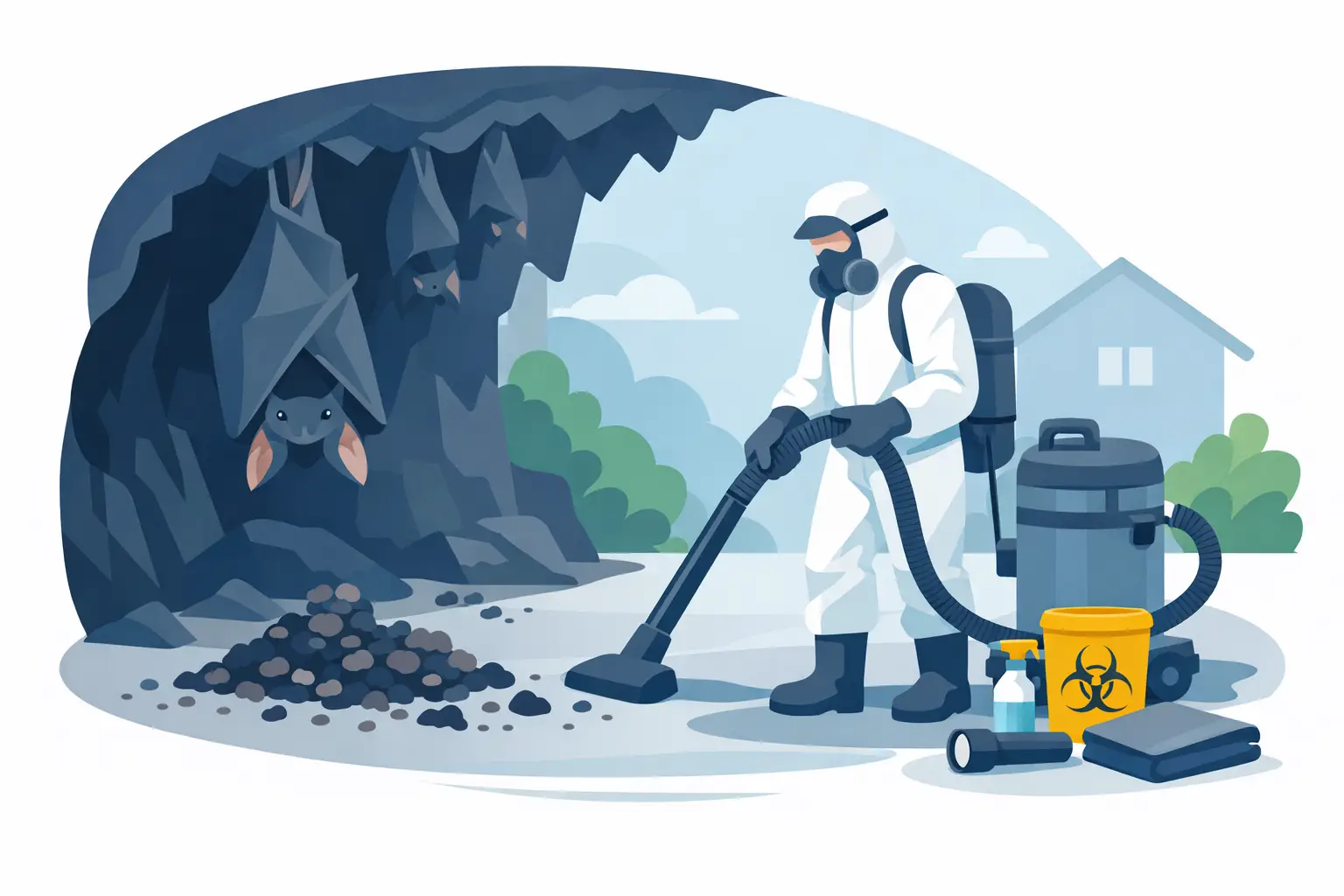
If you have bat droppings in an attic, wall cavity, barn, church, or commercial space, the mess you can see is usually only part of the problem. A professional bat guano cleanup service is not just about removing waste. It is about restoring a contaminated area, reducing health risks, controlling odor, and making sure the space is safe to use again.
That distinction matters. Many property owners first notice scratching sounds, staining near an entry point, or a strong ammonia-like smell. By the time guano becomes obvious, contamination may already be spread across insulation, rafters, beams, and hidden voids. Cleaning it correctly takes more than a broom, a shop vacuum, or a quick spray disinfectant.
Why bat guano cleanup is a specialized service
Bat guano is different from ordinary household debris. It can accumulate in large volumes over time, especially in warm attics and older buildings where a colony has had repeated access. As it builds up, it compresses insulation, creates persistent odor, attracts insects, and contaminates surfaces well beyond the visible pile.
There is also a health concern. Disturbing dry guano can release particles into the air, which is one reason cleanup should be handled carefully and with proper containment, protective equipment, and removal methods. The risk level depends on the amount of accumulation, the location, ventilation, and how long the infestation has been active. A small amount in a detached outbuilding is not the same as heavy contamination above a bedroom ceiling or in a church attic.
This is why bat cleanup should be handled by a company that specializes in bats, not just general pest control. Removing bats humanely is one skill. Cleaning up what they leave behind is another. The two services need to work together if you want a lasting result.
What a bat guano cleanup service should include
A proper bat guano cleanup service begins with inspection. The crew should determine where guano is concentrated, how far contamination has spread, whether insulation is affected, and whether bats are still entering the structure. Cleanup should not be treated as a stand-alone service if the colony is still active. If the entry points have not been professionally identified and sealed through proven exclusion methods, the problem can return quickly.
After inspection, the work area should be controlled to limit the spread of dust and debris. In many cases, contaminated insulation must be removed, especially when urine saturation and droppings have worked deep into the material. Surface-level cleaning is not enough if the odor source remains below it.
The next step is careful guano removal from accessible surfaces and affected building materials. This may include attic floors, beams, wall tops, soffits, and voids where droppings have collected. Depending on the structure, the crew may also need to address damaged vapor barriers, stained drywall, or contaminated storage items.
Once bulk material is removed, the area should be sanitized and deodorized using products and methods appropriate for the space. That does not mean covering odor with fragrance. It means treating contamination at the source. In more severe cases, restoration may also include insulation replacement to bring the area back to a usable condition.
Why DIY cleanup often creates bigger problems
Property owners often ask whether they can clean bat guano themselves. Technically, some people try. In practice, it often goes wrong.
The biggest issue is disturbance. Sweeping, brushing, or using the wrong vacuum can send contaminated dust into the air and through the building. That can affect attic access points, HVAC components, and nearby living areas. DIY cleanup also tends to miss the less visible contamination around joists, entry holes, and insulation edges.
The second issue is timing. If cleanup happens before the bat problem is fully resolved, fresh guano can appear again almost immediately. That is frustrating for homeowners and expensive for commercial properties trying to protect tenants, staff, or customers.
The third issue is incomplete correction. A property may look cleaner while still holding odor, damaged insulation, and active contamination in hidden spaces. What feels like a money-saving shortcut often becomes a second cleanup job later.
The order of operations matters
One of the most common mistakes in this industry is treating guano cleanup and bat removal as unrelated services. They are closely connected.
First, the bats need to be removed safely and humanely using exclusion, not trapping or poisoning. Then the structure needs to be secured so they cannot re-enter. After that, the contaminated areas can be cleaned with confidence that the work will last.
There are seasonal and legal considerations too. In some cases, timing may be affected by the presence of flightless young bats. That is one more reason a specialist inspection matters. The right company will explain what can be done now, what may need to wait briefly, and how to protect the building in the meantime.
Residential and commercial cleanup are not the same
A single-family home attic and a large commercial property may both need guano removal, but the cleanup plan can look very different.
For homeowners, the biggest concerns are usually odor, health, insulation damage, and peace of mind. They want to know whether their attic is safe, whether the bats are gone for good, and whether the problem will affect property value.
For commercial buildings, churches, apartment complexes, and agricultural structures, the stakes can be broader. Occupant safety, sanitation standards, maintenance budgets, scheduling, and liability all come into play. Access can be more complicated, and contamination may be spread across larger rooflines, mechanical spaces, or inaccessible voids. In those settings, experience matters even more because the cleanup has to be effective without creating unnecessary disruption.
Signs you should call for professional help now
If you smell strong ammonia, see piles of dark droppings, notice staining below rooflines, or hear activity at dusk and dawn, it is time to have the property inspected. The same is true if insulation appears matted down, if you have found bats inside living areas, or if a previous cleanup did not solve the odor problem.
You do not need to wait until the mess becomes severe. In fact, early action usually means less contamination, lower restoration cost, and a simpler path to permanent protection.
For properties across South Dakota, Nebraska, Iowa, and Minnesota, this is especially relevant because bat activity often goes unnoticed until seasonal changes make noise and odor more obvious. Older homes, churches, barns, and commercial buildings with small roofline gaps are particularly vulnerable.
What to ask before hiring a bat guano cleanup service
Not every company offering cleanup is truly equipped for bat-related contamination. Ask whether they specialize in bats, whether they perform humane exclusion, whether they inspect for all entry points, and whether cleanup includes sanitation and insulation evaluation. You should also ask about guarantees, experience with similar buildings, and how they protect occupied spaces during the process.
A good provider will answer clearly. They will not minimize the contamination, but they also will not try to scare you. They should explain the scope of work in plain language and show you why each step matters.
That is where a bat specialist stands apart. A focused provider like CP Bat Mitigation approaches the issue as a complete property protection problem, not a one-time debris removal job. That means looking at the colony, the structure, the contamination, and the long-term prevention plan together.
Clean attic, protected property, lasting results
The goal of professional cleanup is not simply to make a space look better. It is to make the property healthier, cleaner, and harder for bats to reclaim. That takes the right sequence, the right equipment, and the right experience.
Every bat deserves a home, just not yours. If your attic, church, commercial property, or outbuilding has signs of guano contamination, the smartest next step is a specialist inspection. The sooner the issue is identified, the easier it is to clean it up properly and move forward with confidence.